Real-Time Analytics Engine
for Sub-Second Data Insights

Run high-throughput analytics on streaming and rapidly changing data with a real-time analytics engine built for sub-second latency queries and scalable real-time lakehouse analytics.

zero

migration

50%

lower costs

<1 min

data freshness

What Is a Real-Time Analytics Engine?

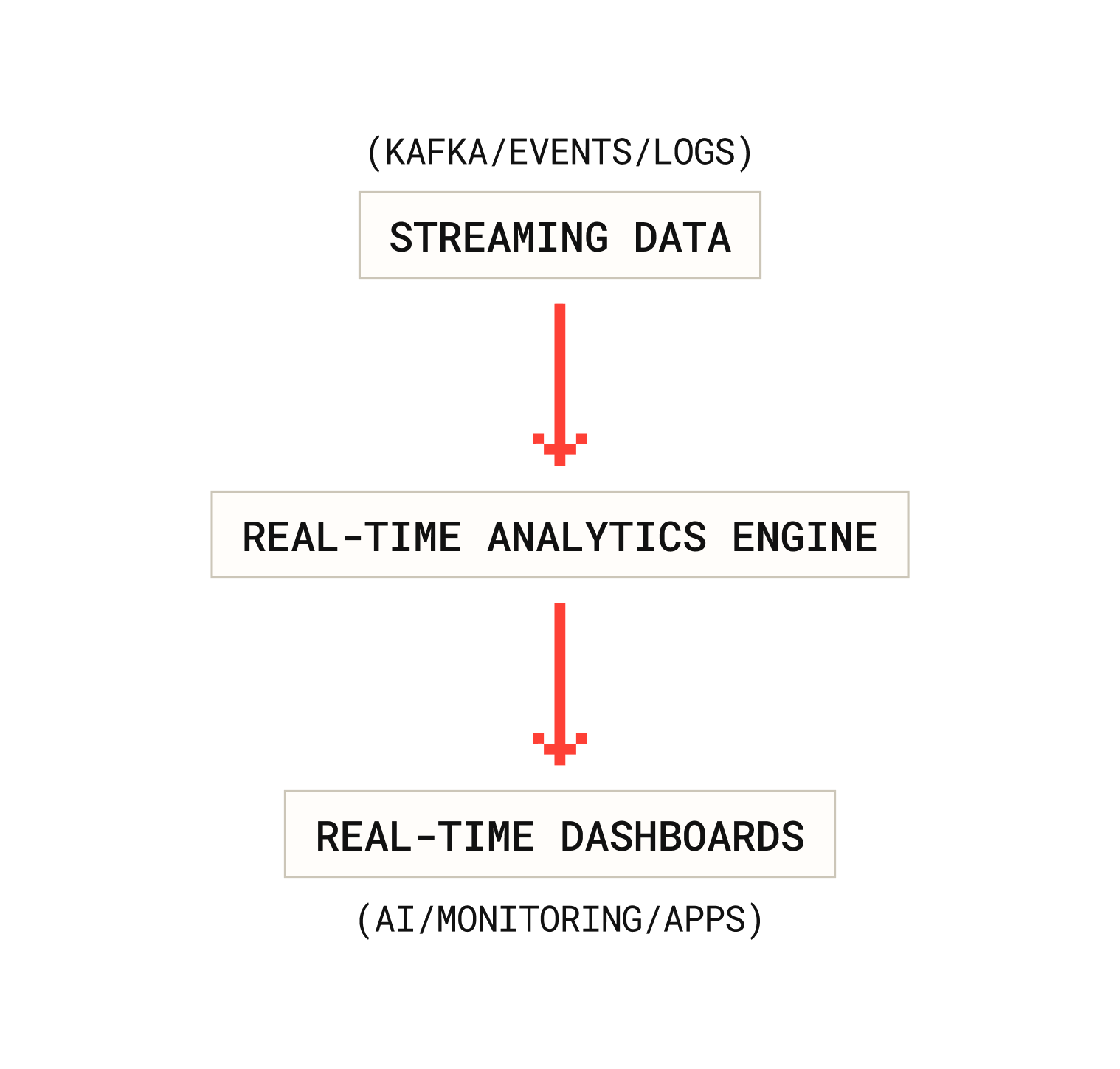
A real-time analytics engine processes and analyzes continuously updating data with minimal latency, enabling organizations to monitor events, power live dashboards, and react to changes instantly.

Unlike traditional batch systems, modern architectures combine scalable compute with a real-time data lake to deliver real-time lakehouse analytics directly on open data storage.

This approach enables teams to run low-latency queries on streaming and historical data from a single platform without building separate real-time pipelines.

Why Modern Teams Choose a Real-Time Analytics Engine

Capability
Traditional Data Warehouse
Real-Time Analytics Engine (e6data)
Data freshness
Batch updates (minutes–hours)
Continuous real-time processing
Query latency
Seconds to minutes
Sub-second analytics
Streaming data support
Limited or complex pipelines
Native real-time ingestion
Throughput
Constrained under concurrency
High-throughput lakehouse analytics
Data movement
Requires ETL & duplication
Query data in place
Architecture
Coupled storage & compute
Decoupled lakehouse architecture
Scalability
Manual or coarse scaling
Dynamic compute scaling
Operational analytics
Difficult
Built for live workloads

Modern Real-Time Lakehouse Architecture

Modern analytics requires an architecture that combines streaming data, scalable compute, and open storage. A real-time lakehouse architecture enables analytics directly on a real-time data lake, delivering fast insights without duplicating data across systems.

By separating storage and compute, teams can scale performance independently while maintaining consistent query speed across workloads.

Designed for Real-Time Analytics at Scale

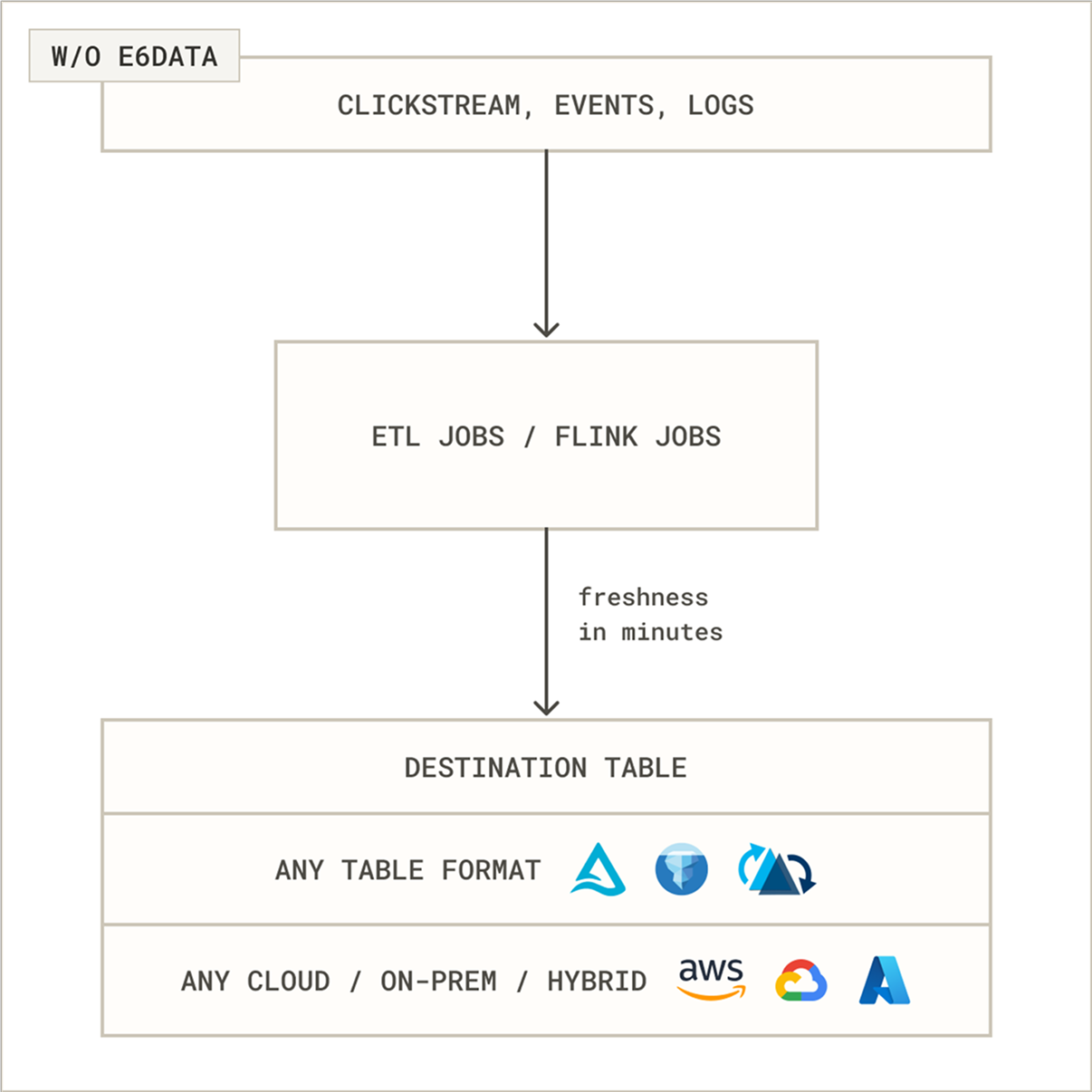
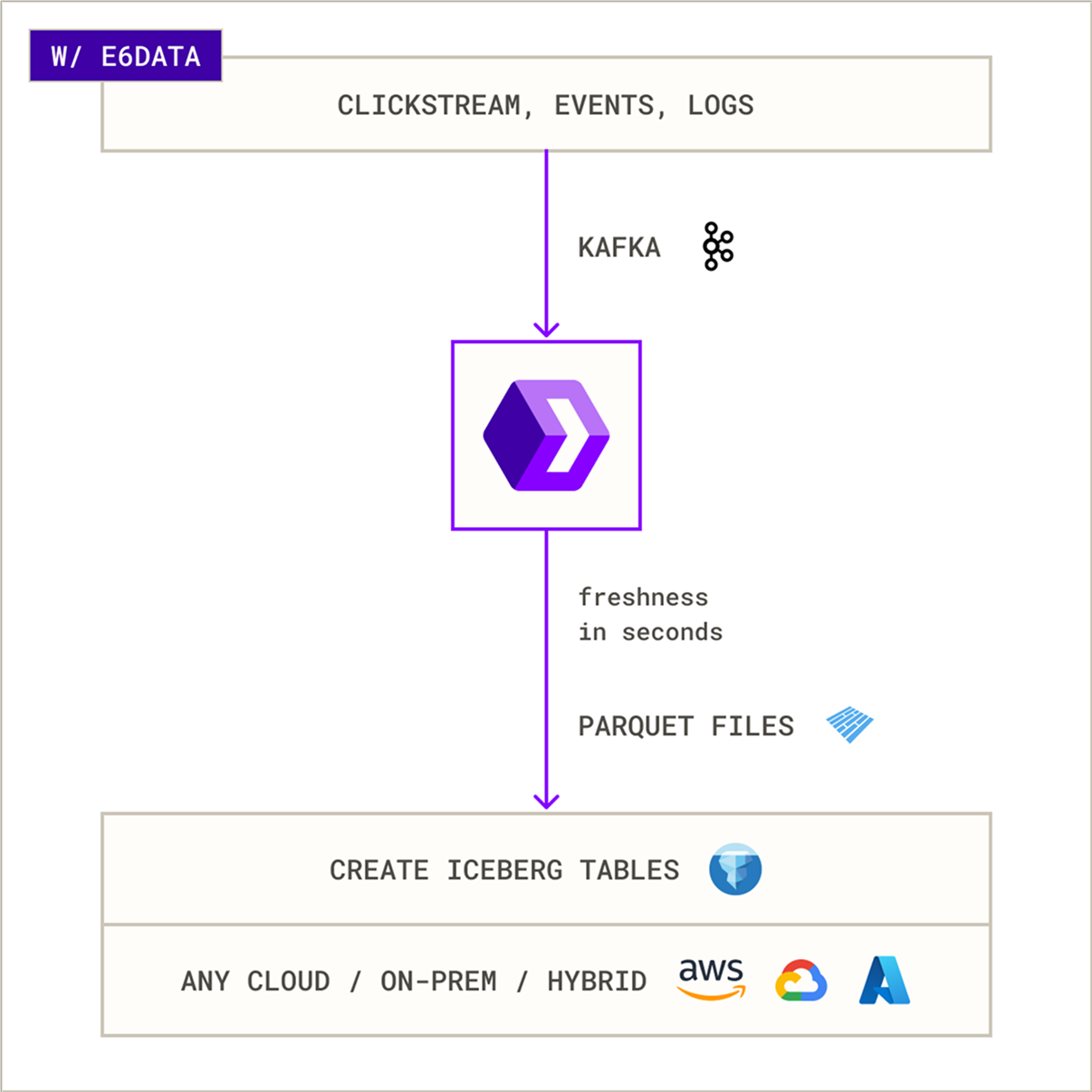
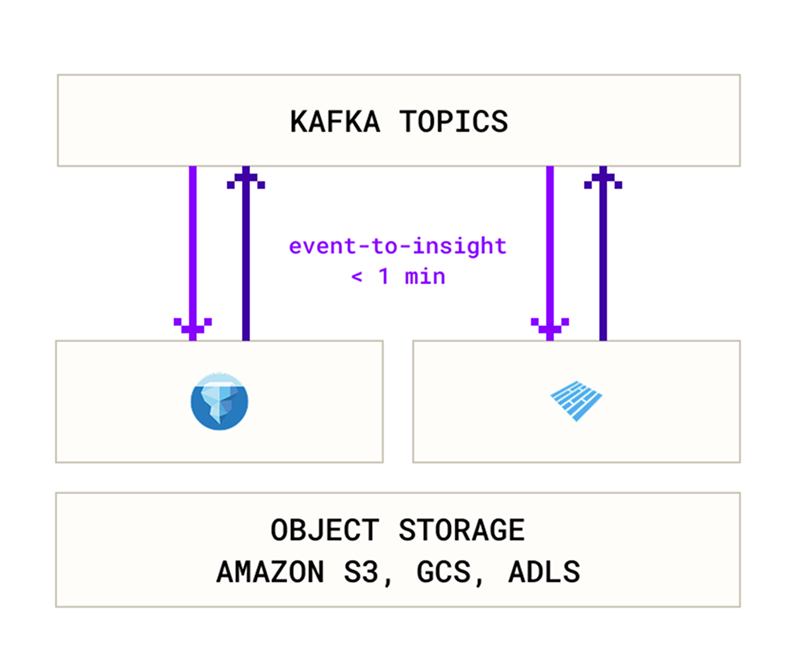
Materialize Kafka topics to Iceberg tables in your S3, GCS or ADLS, and query them in under 60s at object-store cost, without any migration, and ETL.

Query Kafka topics as Iceberg tables

High-performance queries with exactly once delivery, ACID guarantees, dynamic scaling, and instant failure recovery.
SQL query block depicting the ability to do vector search on top of unstructured data from any object-storage (S3, GCS, ADLS) through SQL language.

Deploys in your object storage or lakehouse

Rely on one governed, unified source for every analytics workload with no migrations, no duplicates, and minimal ETL.
SQL query block depicting the ability to do vector search on top of unstructured data from any object-storage (S3, GCS, ADLS) through SQL language.

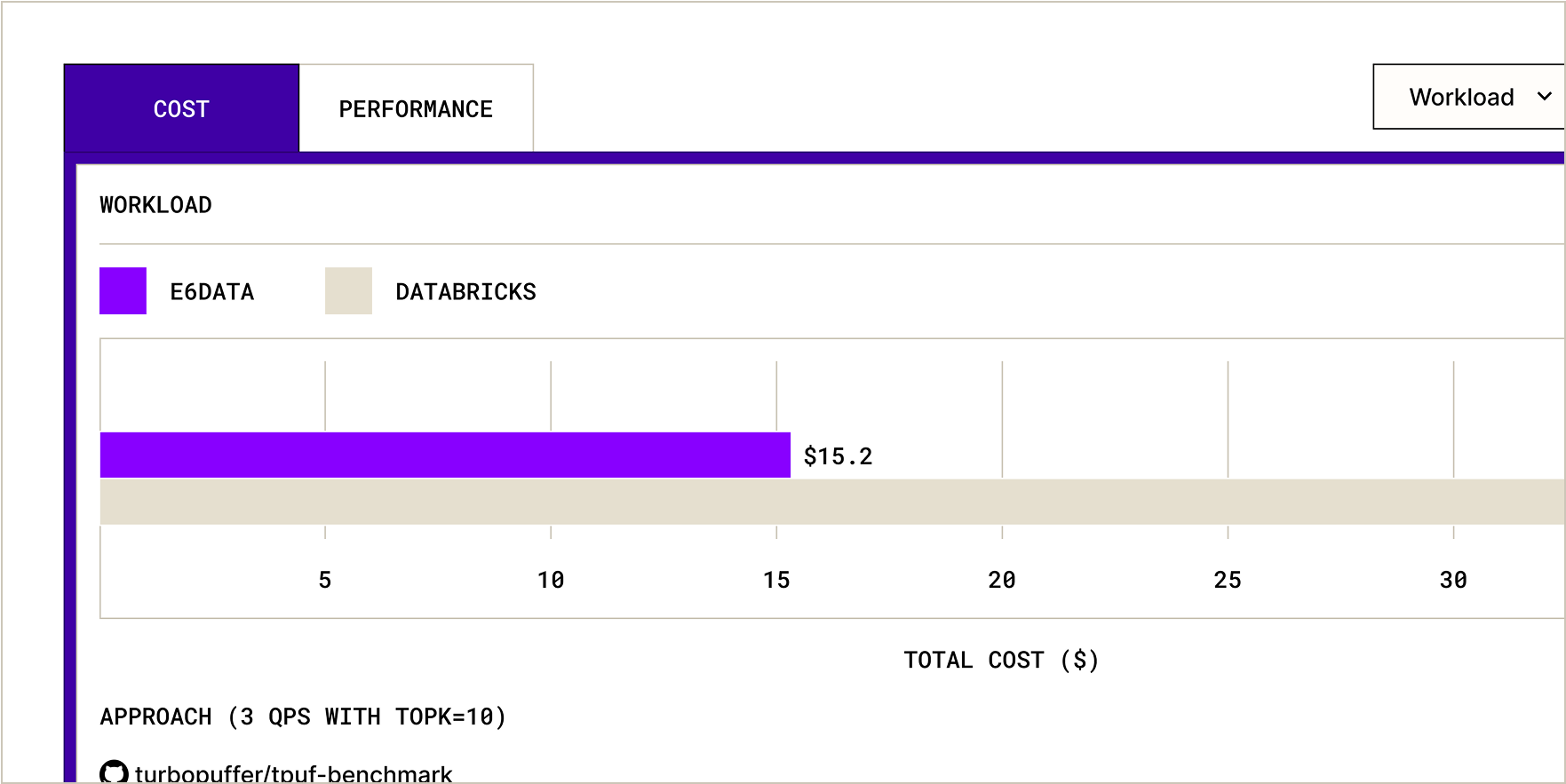
Predictable and lower total compute costs

Avoid extra storage and indexing fees. Ingest and analyze billions of events natively in your lakehouse with custom retention.
SQL query block depicting the ability to do vector search on top of unstructured data from any object-storage (S3, GCS, ADLS) through SQL language.

Unified data for LLM agents, ML pipelines

Build custom AI agents on unified, high-fidelity data from every source, be it streaming or historical, in any format.
Streaming data sources like “Database CDC,” “Event Streams,” and “API and Logs”, get ingested into the e6data real-time streaming ingest, while maintaining sub-second freshness. The data then continues to land in the user’s lakehouse.

Enterprise-grade security and governance

Row/column-level control, IAM integration, and audit-ready logs. SOC 2,ISO, HIPAA, and GDPR—secure by design, with no slowdown.
Sample table listing first name, last name, and masked SSNs, overlaid with compliance badges for ISO, GDPR, HIPAA, and SOC 2, displaying e6data’s compliance and data governance.
Head of Platform Engineering
B2B observability SaaS
“We’ve been looking to move our logs to S3 since the costs became super high. With e6data, it became possible faster as our p95 & p99 latencies were maintained. All our logs now ingest & query in S3. ”

FAQs

What makes a sub-second latency analytics engine important?
Sub-second latency keeps analytics interactive under real user load. It allows dashboards, drill-downs, and embedded analytics to meet SLAs at high concurrency instead of behaving like batch queries.
How is a real-time analytics engine different from a data warehouse?
A real-time analytics engine is designed to make continuously arriving data queryable almost immediately, often directly on the lakehouse, without extra serving copies or ETL-heavy pipelines. A data warehouse is typically built around loading data into a managed analytical store first, with freshness and concurrency shaped by that ingestion model and cluster architecture.
How does a real-time analytics engine achieve low latency?
It achieves low latency by minimizing shuffle, reducing coordinator bottlenecks, evaluating queries in fewer stages, running independent branches in parallel, and pushing compute close to where the data lives. Fine-grained autoscaling also helps sustain latency as concurrency rises.
What workloads benefit most from a high-throughput lakehouse architecture?
The best fits are high-concurrency dashboards, embedded analytics, complex ad-hoc SQL, frequent scheduled analytics, and streaming-heavy workloads such as log observability, security analytics, and clickstream analytics.

“We achieved 1,000 QPS concurrencies with p95 SLAs of < 2s onnear real-time data & complex queries. Other industry leaders couldn’t meet this even at a far higher TCO.”

Chief Operating Officer

15x

faster speed

50%

lower costs

1000+

queries/sec

Thanks for your query. We will share the login details on email shortly!
Oops! Something went wrong while submitting the form.